Stories in which the main character visits another world from the real one are common in children's literature and movies. I want to include this kind of plot in my narrative as it's something people can associate with. I think escapism from the real world into something more fantastical is something that appeals to many people which is why these kinds of stories keep being produced. Also escaping to another world gives me opportunities for things which don't exist in the real world.

The Wonderful Wizard of Oz- L. Frank Baum.
'The Wizard of Oz' is the classic tale of Dorothy being taken to another world (Oz) where she learns a lot of important life lessons with the help of the characters she meets there. The lion who needs courage, the Tin Man who wants a heart and the Scarecrow who wants a brain. The characters all lack self confidence and believe they are lacking something but all prove along the way that they already have the things they wish for.
'Alice In Wonderland' is an obvious inspiration to 'The Wizard of Oz' and features very similar ideas in Alice being transported to Wonderland and meeting characters there who teach her many different life lessons. However 'The Wizard of Oz' has a much more coherent plot than Carroll's narrative.

The Chronicles of Narnia - C.S Lewis
'The Chronicles of Narnia' is a story set across 7 books which each tell various different narratives surrounding the world of Narnia and the children who visit it from the 'real' world. The most well known is 'The Lion, The Witch and The Wardrobe', in which three children find a door to Narnia in the back of a wardrobe. The four children visit Narnia and find that it is in a terrible situation and they choose to help the inhabitants. The character's the children meet and the situations there are put in help them to learn things about themselves and grow, which is a similar theme to the stories in 'The Wizard of Oz' and 'Alice in Wonderland'. In all these stories the children come back home at the end and have changed in some way and have learned something about themselves.
For example in 'The lion, The Witch and The Wardrobe' Edward, the youngest of the two brothers, becomes jealous of his older brother and acts rather selfishly. His anger and jealousy allows him to be tricked by the evil Queen and when he ends up working against his siblings. He has a turning point in the story though and realises that he has been selfish and ends up doing the right thing in remorse for the way he acted. He has great personal growth in the story.
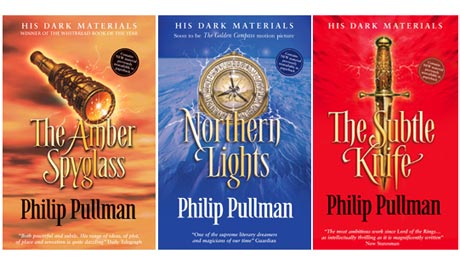
His Dark Materials - Phillip Pullman
'His Dark Materials' is an interesting take on the traditional 'trope' of a protagonist visiting another world as the trilogy starts off being set in the 'other world' and in the second book we see 'our world'. The protagonist from the first book, Lyra Bellaqua visits our world and meets Will Parry, a normal boy from the real world who is then taken to other worlds. It's an interesting slant on the traditional idea. The books still feature a lot of underlying themes like the meaning of life and death and religion but these are put across using a fantasy narrative.

Digimon: Digital Monsters
Digimon is a Japanese anime series which was dubbed and shown on English television in 1999. It follows a group of children who are transported to the 'Digital World' when on a school camping trip. Working together with characters they meet in the world they have to find a way to get back home. There are a lot of underlying themes in the series but the most apparent is friendship and working together and supporting each other. These 'morals' are shown through the fantasy narrative.
These examples prove that this kind of narrative is successful and has been being used for a long time in children's stories. They also show that there can be many different takes and ways of putting this across. Having done this research I am now sure of the route I want to take with my own narrative and I'm also sure that it will be appealing to an audience.

No comments:
Post a Comment