

Taking the Design in a Different Direction.
Initially I was just going to redesign the character to be similar to the other monster designs. This was my plan in BA7 but I wanted to keep to a kind of silhouette design to make 'the King' a little more scary. The plan for redesigning in BA8 was similar to this but to add more detail, however, when I came to sit down and think about how I wanted 'the King' to look visually I had an idea for a different direction to the end of the narrative.
The idea driving the narrative is that Hugo is on a journey of personal discovery and realisation. During the story Hugo learns to accept the death of his sister by learning that being angry that someone is gone and holding on to that feeling will only make him feel worse and it's much better to think of the positive memories they shared, that way his sister will always be with him. He comes to learn this on his journey by finding objects which prompt positive memories of his sister and by defeating the 'final boss' and having a final farewell with his sister.
Because of this idea of a personal journey being the most important thing in the narrative I had the idea of having the 'final boss' being Hugo himself, or a version of him made up of all his negative thoughts. For all of his journey Hugo believes Lily to have been kidnapped by an evil king and when he comes to the final showdown he is faced with himself. I think this will work well on a surface, visual level and on a deeper conceptual level. The reason that Hugo goes on this journey is because he feels that people are forgetting about Lily and because of these negative feelings and anger he is unable to celebrate Lily or remember her in a positive way so really he is the one keeping her memory captive. This is shown by the real 'kidnapper' of his sister's memory is himself.

This is the design I came up with for the 'dark' version of Hugo that he will face. Obviously it has to look like Hugo but be clear that it isn't him so I decided to make it look like a shadowy version. I decided to make the eyes blue in order to tie in with the monsters visually.
By having the final enemy Hugo faces himself it helps to really show the concept behind the story visually and combine the meaning with the narrative.
Research into Similar Themes in Children's Narrative:
The idea of facing a version of yourself is an idea which comes up in many different types of narrative. So in order to
Kingdom Hearts - Anti- Sora


These two images from Playstation 2 game Kingdom Hearts (Square Enix, 2002) show the main character at the top and the dark version of himself at the bottom. In the game you have to fight and defeat yourself as Sora to be able to progress through the game.
The game features worlds from various Disney movies and the world in which you fight your 'shadow' self is the one featuring Peter Pan. This is interesting because in the story of Peter Pan he fights with his own shadow which could be construed as a metaphor of Peter battling with his inner demons or an allusion to the fight between light and dark.
A theme which is very prevalent in children's narrative is the inner battle between good and bad of a character. A common theme that is explored is the idea that anyone can become bad if they let their situation or the things that happen to them effect them for the worst. Most 'baddies' in narratives are bad because of something which happened to them, a lot of times similar hardships can happen to the protagonist but through their choices they come to terms with what has happened and remain 'good guys'.
Naruto Shippuden - Naruto vs Naruto

In the manga comic 'Naruto' (Kishimoto, 1997) the main character has carried the burden, since childhood, of containing within him a magical beast which destroyed the village he lives in and killed many of the villagers including his parents. Knowing this fact the villagers ostracize Naruto and he spends much of his life being hated by the people he tries to befriend and protect. As Naruto grows stronger he saves the village from a major attack from rogue ninja and finally earns the acceptance of his fellow villagers. In a following chapter of the comic Naruto seeks extra power by taming the beast inside him, to do this he has to overcome all the hate within his heart as the beast feeds on the hate of people. Naruto has to overcome an 'evil' version of himself and must come to terms with how he felt about being hated for something that was beyond his control.
Another example from 'Naruto' in the same theme is that fairly early on in the series Naruto meets a boy from another village who, like him, has a beast sealed within him. And like Naruto faced hatred from others for something he had no control over. Unlike Naruto who has always remained a positive person intent on helping his friends, Gaara has succumbed to the hatred in his heart and chose to use his powers to attack Naruto's village. In a final showdown between the two Naruto teaches him that he doesn't have to deal with his feelings that way and that having friends can help to ease his burden. The differences between Naruto and Gaara show that it is not what happens to you but how you learn to deal with it which defines you as a person.
The journey that Hugo goes on is him learning to deal with the anger and negative feelings he is left with when his sister passes away. By learning to accept what has happened and learning to think of his sister with positive feelings rather than negative he learns to let go of his anger and become a stronger, happier person. The 'dark' version of him symbolises all of his anger and serves as a visual metaphor of what could happen to him if he doesn't let go, similar to the example from 'Naruto'.
Disney
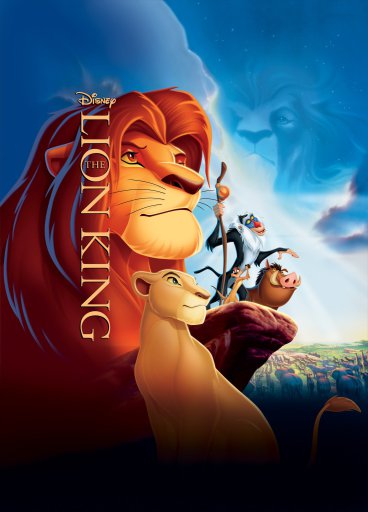
In 'The Lion King' (Disney, 1994) the protagonist Simba goes through a similar journey to the others I have mentioned. Following the death of his father, which Simba believes he is responsible for, Simbe neglects his responsibilities as the next king of the pride because he is afraid of the reactions he will receive if he returns to his pride. His 'coming of age' occurs as he realises instead of running away from his problems he should face them. Instead of facing a version of himself like the other examples I've mentioned, he gets advice from his another character who tells him his father is still alive in Simba's heart so he realises he should honour his responsibilities and return to the pride.
The way in which Simba displays anger and sadness in 'The Lion King', after his father dies, has inspired me a lot in my own work as this is shown in an honest and upfront way. Simba displays a lot of the common reactions during the grieving process.

No comments:
Post a Comment